Harkány

Harkány, first mentioned in written records in 1323, is located in the southern part of Baranya county.
Its role in spa and tourism goes far beyond the traditional small town functions and their impact on the region, and its role in conference, event and sports tourism extends beyond the national borders.
The main economic unit of the town is the Harkányi Gyógyfürdő INC and the Vilmos Zsigmondy Medical Hospital, a rehabilitation centre.
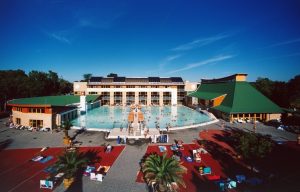
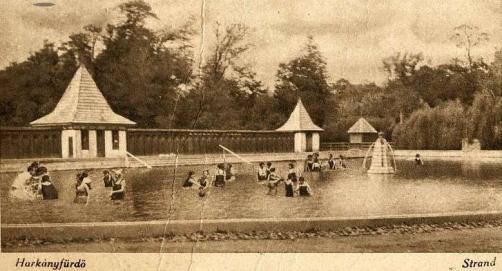
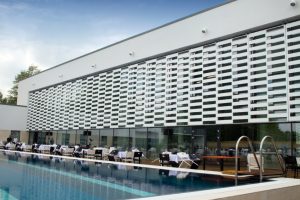
The unique and justly famous Spa and Beach Baths, unique in Europe, has a 200-year history. The 62.5 C water rising from the natural spring helps cure people suffering from various ailments. With its 13.5-hectare park, the spa offers nearly 8000 m² of water, 5000 m² of indoor relaxation area and a spectacular bathing area for visitors, both for those who want to refresh and for those who want to heal.
The hospital has over 50 years of experience in treating active rheumatological conditions. In-patient care is provided on the basis of a referral from a specialist doctor and by appointment. Outpatients are provided with accommodation in the hospital at the cost of the “hotel service”. They successfully treat rheumatological, gynaecological and dermatological complaints. Thanks to the special effect of the medicinal waters of Harkány, patients with psoriasis are permanently symptom-free.
| Nátrium | 160 mg/l |
| Kálium | 15 mg/l |
| Ammónium | 2,9 mg/l |
| Kalcium | 53,4 mg/l |
| Magnézium | 20 mg/l |
| Kationok | 251,3 mg/l |
| Klorid | 108 mg/ |
| Bromid | 0,40 mg/l |
| Jodid | 0,13 mg/l |
| Fluorid | 1,1 mg/l |
| Hidrogénkarbonit | 525 mg/l |
| Szulfid | 13 mg/l |
| Foszfát összesen | 0,1 mg/l |
Harkány has more than 2,000 hours of sunshine a year, an early spring and a frequent “Indian summer” in autumn. During this period, Harkány offers a wide range of cultural activities.
Harkány is a small spa town at the foot of Tenkes, 25 km from Pécs, 18 km from Villány and only 6 km from the Croatian border.
Attractions in the surroundings
Siklós:
 It is the southernmost city in our country. Its main attraction is the Siklós Castle, a protected monument. It has played an important role in our history, and today it is the venue for cultural events, castle plays and exhibitions. Not far from the castle is the Thermal Spa of Siklós, which offers a pleasant bathing experience for visitors. Guests of the hotel have the possibility to buy a discounted spa ticket.
A Siklósi Vár
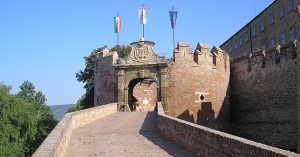 The 18th-century castle is one of the country’s oldest preserved castle manors. It preserves architectural features ranging from Romanesque to Baroque, with the Gothic monuments being the most beautiful. The fortress overlooking the town was first mentioned in a charter in 1190, and the Romanesque windows in the southern wing of the castle are a reminder of the period. The Gothic wing with a closed balcony and the castle chapel with its rich Gothic vaulting and curtain-arched mullioned windows – one of the most beautiful monuments of its kind in Hungary – bear witness to the subsequent development and construction. The Renaissance was also a period of renovation, but this was a time of fortifications in the face of the Turkish invasion. It was then that the circular gateway fortress, the Barbican, and the bridge leading to it were built. The Baroque palace was built in the 18th century from what was left of the earlier times under Turkish rule. The palace halls house the prison museum, the stone museum, and the castle museum on the history of glove-making in Pécs. On the site of the present town, the Romans established a military settlement called Serena. The fortress was first mentioned in a charter in 1190. In the 13th century, the area was the property of the Suklosi family of the tribe of Khan, belonging to the tribe of Botond, and the Romanesque windows in the southern wing of the castle are a reminder of this period. The first official document dates back to 1294. From that time onwards, it was the centre and seat of the most important families in Hungarian history.
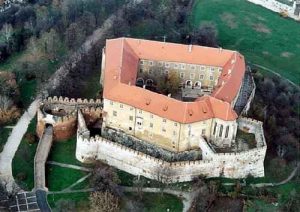 In 1394, the castle became the property of the Garai family, which led to decades of development and construction. The Gothic wing and the castle chapel bear witness to this period. Count Kázmér Batthyány, the foreign minister of the Kossuth government, is buried in the chapel. The Perényi family built the castle from 1515, and are responsible for the Renaissance alterations. Imre Perényi’s wife was Dorottya Kanizsai. In the castle garden stands a statue of Dorottya Kanizsai, the former mistress of the castle, who was the burier of the dead of the Battle of Mohács. Siklós was liberated from Turkish rule by the Habsburgs and the armies of the Christian League, and became an imperial estate, and was donated to the imperial general Count Eneas Caprara. It was thanks to this that Emperor Lipót later made an exception for Siklós Castle, when he did not have it destroyed like the other Hungarian citadels. On 4 May 1770, Joseph II also visited the town to meet his youthful tutor, Count Károly Batthyány. There is no visible monument, but it is a historical fact that King Sigismund was imprisoned here for five months in 1401. The film series “Captain Tenkes” was also shot here. The castle is still inhabitable today.
Malkoch bej-jami
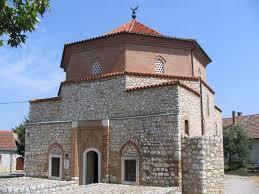 Malkoch was a Klissa Sanjakbey who built the mosque and died in 1565. We do not know the exact date of his mosque, but knowing the founder of the mosque, we can narrow it down to between 1543 and 1565.
The restoration of the mosque lasted until 1994, and was so successful that in 1993 it was awarded the Europa Nostra prize, which is awarded every year for outstanding restoration of an architectural monument. Today, the building plays a role in the cultural life of the city, but since the South Slavic war it has also returned to its original function. Open from spring to autumn! It is closed in winter, but groups of 20 or more are welcome by appointment!
Máriagyűd
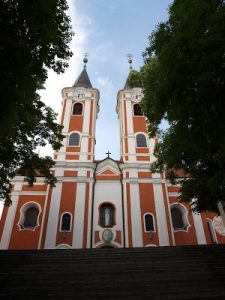 One of Hungary’s most important and popular pilgrimage sites. The Roman Catholic basilica, with two towers in Baroque style, was built by the Franciscans in the 18th century to its present form. It has long been a place of pilgrimage due to its frequent prayer services and the apparitions of the Virgin Mary in the 17th century. The church was granted the status of Basilica Minor in 2008. Máriagyűd is the end point of the Hungarian Pilgrimage Route connecting the Hungarian holy places.
Villány
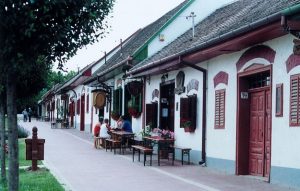 Villány is the home of full-bodied, fiery red wines and is now a wine region of European renown. The wonderful nature, the climate, the diligence, expertise and hospitality of the people who live here, as well as the high quality standards expected of the wine, have made Villány red wine internationally and nationally famous. Experience it all on the spot! Villány offers you special wines to meet your needs, delicious food, quality programmes along the wine trail and friendly and hospitable people.
The Villány Wine Museum is open all year round for those who wish to learn about the history of the Villány-Siklós wine region, the development of viticulture and wine production and the most important tools used in this process. They can also participate in wine tastings and buy wine.
Statue Park in Nagyharsány
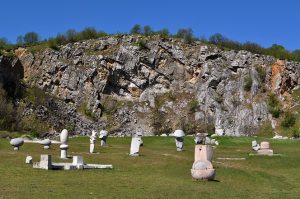 The Nagyharsány Sculpture Park is located on the eastern side of the Szársomlyó hill in southern Baranya, in a disused quarry on the way to Villány.
The sculpture park at the eastern end of Mount Szársomlyó, 180 metres above sea level, was opened in 1968. Formerly a mine shaft, the site of the mine is now home to this unique open-air exhibition. Open-air sculptures made from the mountain’s rocks occupy this special space.
Jurassic limestone is the raw material for the sculptures. National and foreign sculptors can use the stones to create their works, which can then be exhibited. The art colony, with its art house, is located in the Gyimóthy villa, a short walk 200 metres from the park. Nearly two hundred artists have worked in the sculpture park in the almost 40 years since it was founded. There are 136 monumental stone sculptures of their work in the mine workings and walkways.
Pécs
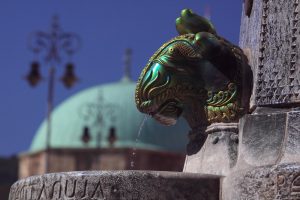 It is one of Hungary’s oldest settlements, rich in monuments, and the administrative and intellectual centre of the South Transdanubian region. The cultural life of the city is outstanding both in the field of music and fine arts. Its collections – the Modern Hungarian Gallery, the Csontváry Museum, the Ferenc Martyn Museum, the Victor Vasarely Museum, the Amerigo Tot Museum, the “Street” of Erzsébet Schaár, and its municipal and private galleries offer a uniquely complete presentation of 20th century Hungarian art. The town’s traditionally vibrant intellectual life is characterised by the fact that it is also home to festivals such as the University Days of Pécs, the Pécs Days and the Pécs National Theatre Meeting (POSZT). In 2010, Pécs was one of the European Capitals of Culture, along with Istanbul and Essen. The award of the title has opened up a number of investment opportunities with the support of the European Union. The Pécs2010 Capital of Culture project was based on four cultural projects: the Kodály Centre, the South Transdanubian Regional Library and Knowledge Centre, the Street of Museums and the Zsolnay Cultural Quarter. A number of public spaces and parks have been renovated.
Pécs’ Mediterranean climate, vibrant cultural life, exciting festivals and packed café terraces attract many to the city with its two thousand year history. Here are the best things to do when you’re in the area.:
Pécs Basilica and Cathedral
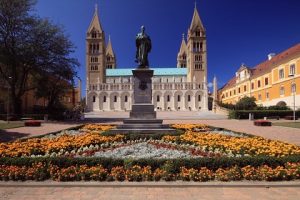 The Cathedral of St. Peter and St. Paul in Pécs (also known as the Castle Church, Cathedral, Basilica), founded in the time of King St. Stephen, bears the stylistic traces of several centuries. Its most significant remodelling is the work of Mihály Pollack. The exterior of the cathedral has been redecorated in a few neoclassical features, but the Gothic style predominates for the most part. It was rebuilt between 1882 and 1891 and took its present form. The architect was Frigyes Schmidt, whose idea was to restore the church to the neo-Romanesque style.
Zsolnay Cultural Quarter
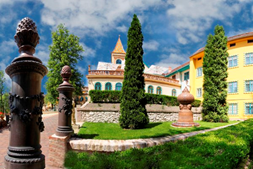 The Zsolnay Cultural Quarter was the largest investment of the Pécs 2010 European Capital of Culture project, built on a large part of the Zsolnay Porcelain Manufactory site in Pécs over a period of 2 years. Thanks to the investment of more than 11 billion forints, the 5 hectares of the porcelain manufactory have been revitalised. The cultural quarter, which is part of the joint rehabilitation of one of the largest factory buildings in Central Europe, is divided into four parts. The most important elements of the Míves quarter are an exhibition on the Zsolnay family and its history, the unique Pink Zsolnay exhibition by Barnabás Winkler and the Gyugyi collection in the Sikorski House. These will be linked to the restored Zsolnay Mausoleum, the House of Creativity and Incubation and the Artisans’ Street shop. The Creative Quarter is home to cultural institutions, restaurants and festivals. The Children’s and Family Quarter is home to the Planetarium, the new Pécs Gallery building, which can host major international events, and the renewed Bóbita Puppet Theatre, while the University Quarter houses several faculties (e.g. the Faculty of Arts) and the newly established departments of the University of Pécs.
Lock wall
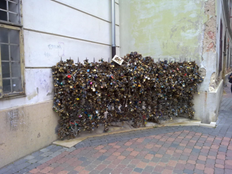 Thousands of sheets, like symbols of love, crowd the tiny wrought-iron grille on Janus Pannonius Street. The mass of padlocks, in different colours, shapes and sometimes with the names of lovers, has become one of the city’s unique landmarks.
Tracing Turkish memories
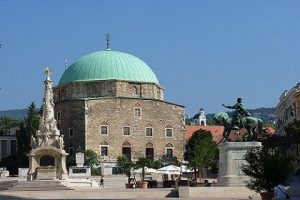 Pécs is Hungary’s richest city in Turkish relics. In the main square of the town, on Széchenyi Square, stands the hemispherical dome mosque of Gazi Qasim Pasha, which is now a Roman Catholic church. The mosque’s prayer chapels, donkey-arched windows and stalactite vaulting still preserve the characteristics of Turkish architecture. The other Turkish monument in the city is the mosque of Yakovali Hassan, which stands to the south of the hospital. It is the only Turkish temple in the country with a minaret. At the western end of Franciscan Street are the ruins of the baths of Memi Pasha, and on the Mecsek side is the turbe (tomb chapel) of Idris Baba.
World Heritage underground – Ancient Christian burial chambers
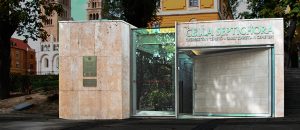 You can enter a special underground world when you visit one of Pécs’ most outstanding sights. The Early Christian cemetery complex, established in the 4th century AD in the former town of Sopianae, was inscribed on the World Heritage List of the most precious treasures of humanity in 2000.
The wall paintings, decorated with biblical and other religious scenes and early Christian symbols, are outstanding works of late Roman early Christian art. The size and richness of the Early Christian cemetery of Pécs and the underground remains of the ancient city are the most important Roman monuments outside Italy.
Panoramic view from the Misina
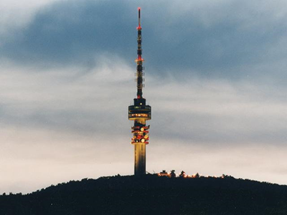 A visit to the TV tower and lookout tower, visible from every corner of the city, is a must on a trip to Pécs. Although the Misina-tető is lower in altitude than many of the peaks of the Mecsek, it is the closest and most accessible lookout point to the city centre (Kiss József Lookout), which can be reached by car or bus. If you have the right spirit of adventure, you can also set off on foot, and your efforts will not be in vain, as you will be greeted by a magnificent panorama from the circular lookout on the 70-metre-high terrace of the 176-metre-high TV tower.
Zoo in Mecsek
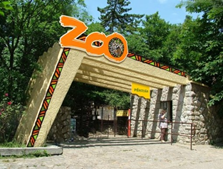 Among the activities for families with children, it is definitely worth taking time to visit the zoo, which features Hungarian and exotic animals and one of the country’s most beautiful natural settings. The Pécs Zoo is located on the side of the Mecsek Mountains, on an area of almost 3.5 hectares. Surrounded by woodland, the zoo has been hosting summer camps for more than 30 years, giving children the chance to get to know the animals living here. Every Sunday, the zoo organises guided walks with a guided tour of the zoo.
In addition to the Zoo, the Aquarium-Terrarium in the city centre is also home to some special animals, especially for those interested in the mysterious world of reptiles.
Mecsextrém Park
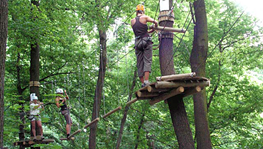 For the ever-mobile, there are places to relax further from the city. One of these is the Mecsextrém Park, which promises active recreation. Located two kilometres from Pécs, the park is the perfect place for extreme sports enthusiasts to get adventurous. Leisure and team-building games are available, as well as extreme sports equipment, and there are more than twenty different types of games
Drávaszabolcs
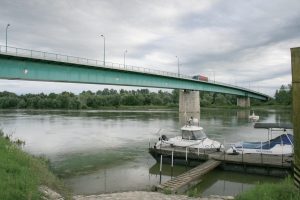 Cruise: on board the 45-seater cruise boat “SYREN” you can discover the wild and scenic Drava countryside, its unique bird and animal life.
The cruise boat’s permanent port of call is Drávaszabolcs, the Croatian-Hungarian border crossing point on the Drava.
Our cruises pass through the Danube-Drava National Park, offering wonderful boat trips through the picturesque Drava countryside. It is worth exploring this landscape: glide on the waters of the Drava.
With its national park, its colourful flora and fauna, and its swift-running Dráva, it is a worthy tourist attraction.
Programme opportunities
Visit Cormorant Island on a 1.5-hour guided boat trip. Cruise on the Drava with a 45-person cruise boat. Wine tasting and boat trip. Boat trips with disembarkation and a walk along the banks of the Drava. Sunset on the Drava with a glass of champagne.
Drava
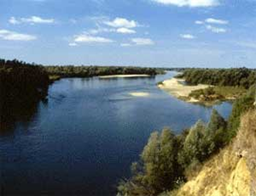 Our clearest river is the Drava. It enters our country in the Zákány-Őrtilos region and leaves at Drávaszabolcs. Along its banks, you can admire the largely undisturbed floodplain wildlife. The formed backwaters and their surroundings are home to many special species of flora and fauna, and offer visitors peace and tranquillity.
The clear, fast-flowing river water is home to several species of snails, cichlids and tegetes, which are known only from here. Special mention should be made of the Dravidian quetzal, the only one of its kind on Earth. The river is rich in dragonfly fauna, which also includes species protected by international conventions, such as the forest dragonfly and the yellow-legged dragonfly.
The Drava and its tributaries contain around 3/4 of the country’s fish species, including 20 protected species. Of particular natural value are the highly protected Hungarian and German sturgeon, as well as the protected walleye pollock, damsel sturgeon and stickleback. The Drava is of major importance for waterfowl migration and wintering: thousands of waterfowl flock to the river in autumn and spring, and especially in winter. Several protected and specially protected species of birds (little cormorant, little egret, great egret, osprey, etc.) regularly occur in the area.
The reef islands of the Drava are very valuable habitats. The protected coastal willow and the tufted willow flycatcher, which is found only here in Hungary, live in the established shrub willows. The reef islands have a special nesting community of the little tern, the common tern and the rare little tern, which does not nest elsewhere in Hungary. Thousands of pairs of shore swallows nest on the steep bank along the river, as well as the colourful kingfisher and gyrfalcon.
The most important protected species in the softwoods surrounding the river are the snake-tongue fern, tall fescue and the often abundant winter hellebore. The Hungarian show butterfly is an important natural asset. Among the rich birdlife of these willow and willow-steppe forests, the highly protected black stork and the white-tailed eagle are worthy of mention. This is a very popular activity among our hotel guests.
Beremend
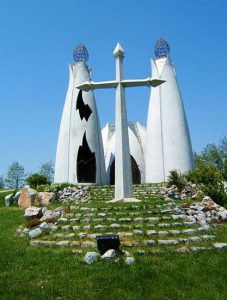 Reconciliation Chapel: The chapel was built on the lookout point from which refugees of the recent South Slavic war could see how their villages and churches across the border were victims of inhuman destruction. It is also a place of remembrance for those who were deported from Beremend and its surroundings in 1946. On this vantage point, the different nationalities and religious denominations have jointly built this ecumenical chapel in the spirit of peace between them. At the foot of the chapel there are many concerts, musical dances and traditional events.
Mendele Memorial House – Beremend: the birthplace of Ferenc Mendele, Ybl Prize-winning architect. Exhibition of his work, with original furnishings of the building. It also hosts other temporary exhibitions.
Sellye
 The town of Sellye is located in Baranya County, south of Szigetvár, in the Ormánság between Bogdása and Csányoszró. It can only be reached by road, as passenger rail transport on this line has been discontinued. Sellye is the largest settlement and the centre of a region with a unique wealth of natural values and folk traditions, known as the Ormánság. The landscape along the Drava is one of the most varied in the country, with the most surprises in wood, water and game, and its values can be unlocked by skilled human diligence and the capital that is so lacking here.
Among the city’s architectural monuments, the 16th century Draskovich Castle stands out, which today serves as a student residence, but also offers comfortable accommodation for visitors. After a walk in its beautiful park, you can visit the Ormánság Museum, also in the main square, named after the ethnographer Géza Kiss, in front of which stands a bust of the scientist. The museum offers a glimpse of the former archaic way of life of the people who had daily contact with the Drava, the weavers, folk furniture and ceramics of the Ormánság, famous far and wide, and the house with the stilts, a special chapter in Hungarian folk architecture. Those with a discerning eye for beauty will find many old masterpieces of folk architecture in this small town that has retained its rural charm.
Kórós
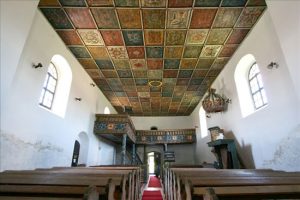 Kórós is a village in Baranya County, in the Transdanubian region, in the sub-region of Sellye. It is situated west of Harkány, between Rádfalva and Adorjás. A special feature of this tiny village on the edge of the Ormánság is its late Baroque Reformed church with a wooden ceiling built in 1793. It was enlarged in 1834, which resulted in its disproportionately stretched nave, but also in the two beautifully decorated choirs with parapets. The apse was modelled on the Catholic churches, but in accordance with the Reformed liturgy the altar was placed in the middle of the nave, with pews ‘in front’ and ‘behind’, and choirs at either end of the church. The painted wooden ceiling with its floral and bird motifs shows Hungarian folk art of a kind that can be found in the Upper Tisza region, around Kaposvár and in Transylvania. Variety was essential, no two cassettes or choral vestments could be made alike.
Kémes Ancestral Drava Visitor Centre
Ormánság is a small rural area in Baranya County, located on the floodplain of the Drava River, whose name derives from the Finno-Ugric word “ur”, meaning “ur”, meaning “ur”, meaning “ur”, meaning “ur”, meaning “ur”, meaning “ur”.
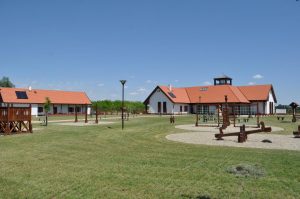
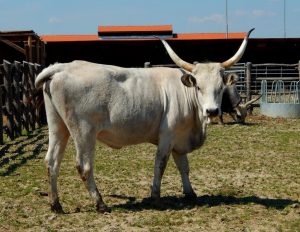
As a small village area, it has many attractions for rural tourism. Its painted wooden churches, museums, extensive woodland and water-rich environment attract tourists from near and far, as there is something for all ages. The Ancient Drau Visitor Centre, which presents the natural values and traditions of the Ormánság, offers an interactive exhibition, a major, educational trails and a variety of programmes. In the main building, visitors can learn about the habitats of the region, its species-rich fauna and cultural, historical and ethnographic values of the area through an interactive and interesting exhibition. Visitors can also learn about the bird life of the marshes bordering the estuary, the rich biodiversity of the wooded grasslands near the water and take a walk under the shady canopy of the wooded groves. They will also learn how the people who once lived here adapted to this environment and how they managed to live in harmony with nature. The farm is home to a complex of buildings showing the old Hungarian domestic animals typical of the area. Here you can see the animals, rarely seen today, that once helped our ancestors in their daily lives. Visitors can see grey cattle, Mangalica pigs, Hutsul horses, old sheep and poultry. The three trails of different lengths in the Ancient Drava Visitor Centre offer visitors a wealth of experience and knowledge, the opportunity to discover the natural values of the Drava, the world of traditional farming, and the Ancient Drava programme. The trails can be followed individually or with a guide. In addition, a number of thematic programmes can be booked on the trails, such as bird watching and bird ringing demonstrations, nature photography, or a night hike with the sound of the golden jackal.